
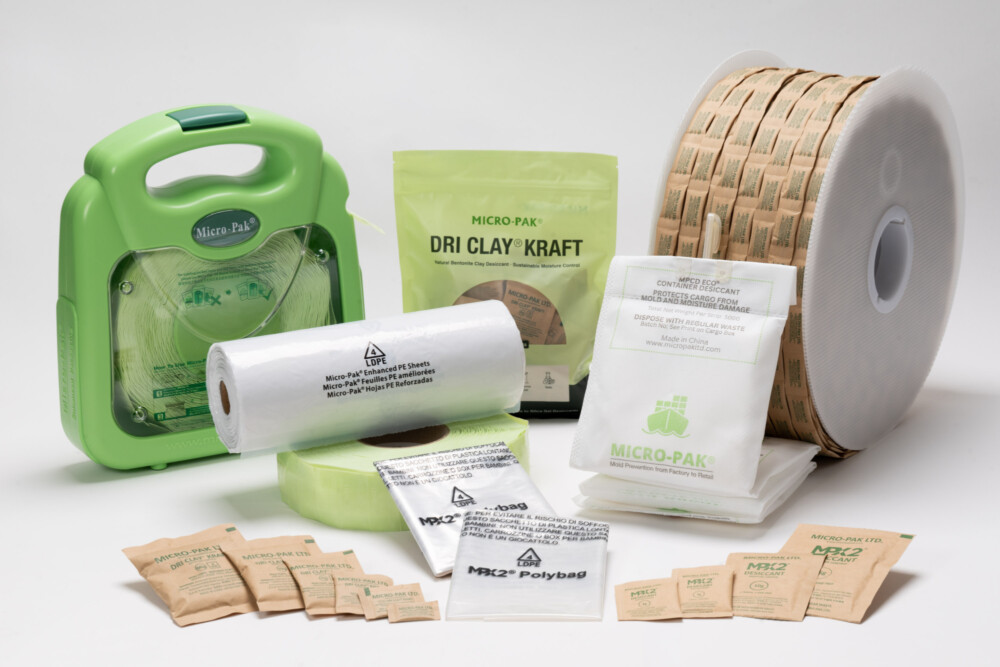
Anti-microbial products distributed in the US must be registered with the Environmental Protection Agency (EPA), and in Europe with the Biocidal Products Regulation (BPR). Micro-Pak’s anti-mold products include stickers for footwear in shoeboxes, PE sheets for products packaged in polybags, and MPX2® polybags made from 100% post-consumer recycled LDPE with a built-in anti-microbial function. All are compliant with both the EPA and BPR and we are always ready to provide the necessary documentation.
Unfortunately, it is common for anti-mold suppliers to misrepresent these rules or give excuses why the rules do not apply to them. This is especially true of anti-mold products labelled as “all-natural” that claim to be made from wasabi, mustard seed, natural essential oils, or other similar ingredients that sound safe and natural. The reality however is very different. Most of these “all-natural” anti-mold products are not natural, not regulatory compliant, and thereby not proven to be safe.
The major risk for brands when using an unregistered product is that in case of any legal claims, it is the brand that will be liable, not the anti-mold supplier.
You can verify if your anti-mold product is safe and compliant as follows:
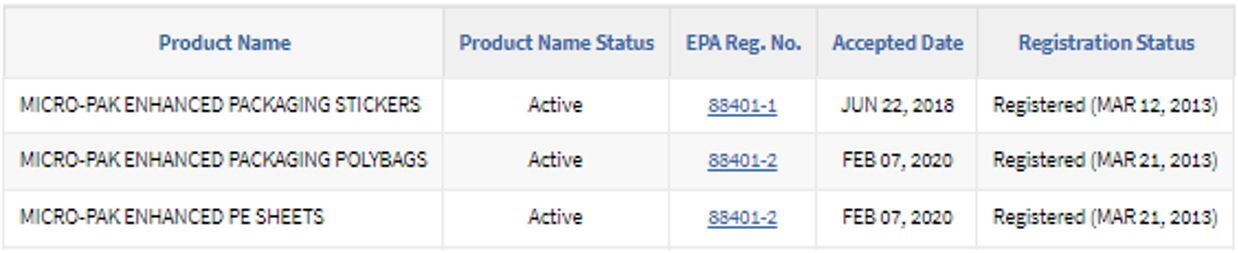
1) Check if the product is registered with the EPA in the US
All products registered with the EPA will be assigned an EPA registration number. Ask the supplier to provide their EPA registration number(s) and then search their registration on the EPA website
Micro-Pak’s anti-mold stickers, PE sheets, and polybags are all EPA-registered. The registration process involves rigorous safety testing at Federal level including for eye and skin irritation, inhalation and oral toxicity, as well as for efficacy (to confirm that the product functions as we say it does).
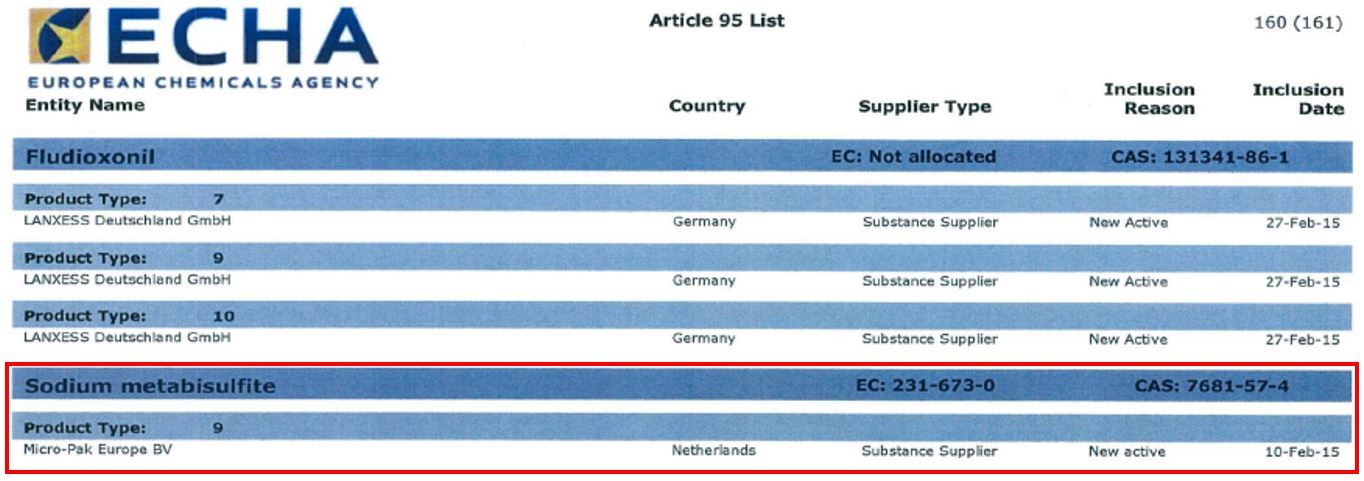
2) How to tell if an active ingredient is compliant with BPR
The ingredient will appear on the Article 95 List next to their company name. If your supplier’s company name is different from the registered company, ask them to explain why and to provide proof of a connection between their company and the registered company:
3) What is a Minimum Risk Pesticide?
Many suppliers will claim that their product is considered a “minimum risk pesticide” and is thus exempt from EPA registration. The EPA has a very clear list of ingredients that are considered “minimum risk pesticides” and any ingredient outside that list requires EPA registration. Commonly used ingredients in “all-natural” anti-mold products such as mustard seed and wasabi are not on the exempt list and therefore require EPA registration.
Additional Points
EPA and BPR registrations require that suppliers register their own products for their particular application.
It is not permissible to take an ingredient that is registered for one specific use and apply it to a different application. For instance, Allyl isothiocyanate (AITC) is commonly used in anti-mold products. While suppliers may emphasize that AITC is a natural compound derived from plants and used as a food additive, they often neglect to mention its other applications, which include tear gas, commercial fumigants, and animal hunting repellents—many of which are highly toxic. The only way to ensure that the dosage of AITC in their anti-mold product is safe, rather than toxic, is if the product is officially registered. Using an unregistered product puts the brand at risk of introducing a harmful substance into their packaging.
Additionally, it is not correct for suppliers to claim that their ingredients are on an exempt ingredient list when they are not. Brands must verify these claims by confirming the ingredients and thoroughly checking the exempt ingredient lists.
Lastly, it is not sufficient for suppliers to show restricted substance test reports in lieu of registration proof. Test reports do equate to official product registrations.
Only by using anti-mold products that are fully registered as specified can brands ensure that all safety precautions have been followed, which provides them with substantial liability protection against potential legal action stemming from customer complaints.
Contact Us for more information.